November 2025
🚀 November 2025: From Artisans to Automation
Something big is happening in marketing right now.
The tools are changing even faster than we thought.
Google just dropped three major updates. Their new image tool gives unprecedented control over visual creation. Their video tool turns text into slides, and slides into full videos. And Gemini 3 doesn’t just chat—it responds in a new multimedia format, generating interactive, magazine-style layouts instantly.
But here is what matters more than the tools themselves.
Coca-Cola ran an AI-generated Christmas ad. People felt it was cold. Missing the human touch. Meanwhile, influencer marketing now delivers returns matching TV advertising. Why? Because it feels real and is amplified by automation.
See the pattern? Influence is growing because creators use automation to scale their creativity, not replace it.
But doing this at scale requires discipline. As Denis Ravera from Arcane puts it, marketing is shifting “from artisans to automation platforms.”
The issue isn’t the technology—everyone will eventually have the same tools. The real advantage is how marketing-sales-tech teams organise instructions.
This means documenting exactly what “good” looks like for your brand, mapping key workflows, and organising workflow-builder teams to operationalise and maintain the platform. It also means orchestrating a unified customer view and impact indicators—because without proper data, AI will only automate the mess.
The winners won’t be the ones who just click “generate.”
They will be the leaders who use this speed to amplify their creativity, not replace it.
🎥 Watch the video summary of this newsletter
-
Google has launched Nano Banana Pro, a next-level AI image generation model that gives unprecedented control for creating visuals that closely match descriptions. This sophisticated tool excels at transforming simple prompts into complex visuals—from story diagrams and presentation slides to multilingual text in native 4K resolution. The model demonstrates remarkable versatility, generating production-ready outputs with exceptional realism in lighting and detail, maintaining character consistency across scenes, animating content, and even converting handwritten notes into polished diagrams. From a photorealistic perspective, we're now seeing genuinely indistinguishable results from actual photographs. People are testing it with diverse examples ranging from themed visual styles (like Lego aesthetics) and Japanese calligraphy to accurate historical recreations and financial document visualization. Nano Banana Pro integrates seamlessly into Google's ecosystem through the Gemini app, offering both free experimentation and unlimited access via a $20 subscription—positioning itself as a game-changer for content creators seeking to maximize their creative potential and online visibility.
My Take: Precise control is next level, and it's absolutely crucial for marketing, sales, and digital workflows. The ability to tailor visuals to specific brand identities and guidelines means organizations can integrate these powerful AI models into their overall campaign workflows while maintaining greater control over consistent brand standards. This level of control—from adjusting visual styles to managing lighting, shots, and character consistency—reveals how future campaign organization will adopt industrial-scale approaches. However, with this new capability, it will be critical to preserve authenticity to distinguish from all the competition creating content faster than ever. Therefore, it's up to marketing, sales, and digital leaders and operational teams to integrate these tools while preserving their brand's authenticity, soul, and creativity.
| #Image #Leader #Marketing | Google | 2025/11/20 -
Google has launched Gemini 3, a groundbreaking AI model that truly operates at the next level of capability. What makes it genuinely next-level is its sophisticated multimodal architecture that seamlessly integrates multiple types of media—text, images, video, dynamic views, and interactive components—into fluid communication experiences. You can provide it with video, images, and text to initiate a discussion and receive responses in text, sound, and interactive comparisons presented as magazine-style views or interactive website experiences. This is achieved through a combination of specialized AI models working together to understand and respond to your prompts via generative interfaces. For a concrete example, when you analyze country names and locations, Gemini 3 can automatically draw a map (or show Google Maps), highlight the specific countries you're discussing, and generate interactive visualizations without additional instruction. Beyond communication, the model handles unstructured and messy data with significantly superior results—you can input raw, uncleaned context and it makes sense of information that would confuse lesser models. Most impressively, Gemini 3 demonstrates next-level coding skills with particular strength in frontend creation and UI generation, building sophisticated visual interfaces and complete websites with remarkable quality and speed. The model also offers compelling economics at 25% cheaper than competitors like Claude Sonnet 4.5. Additionally, it provides enhanced control over outputs through integrated safety features and approval workflows—a critical capability in sensitive environments where marketing teams and enterprises need to review and approve AI suggestions before publication or client delivery.
My take: Gemini 3 and its ecosystem represent Google's aggressive push to claim its rightful place in the AI assistant market. The model benefits individual developers and large enterprises alike, making it appealing across the spectrum. Its deep integration into Google's main interfaces, combined with competitive pricing and dedicated tools like Antigravity, creates a powerful competitive advantage. Strategic partnerships with companies like Notion and Apple will accelerate adoption, while rumors of Siri running on Gemini's foundation signal Google's ambition to embed itself into the devices and workflows that billions use daily. This represents a deliberate shift toward workflow optimization rather than one-size-fits-all AI. Gemini 3's multimodal capabilities excel for intensive research and visual analysis but work less effectively for simple daily tasks (where faster, leaner models like ChatGPT perform better) and less so for sophisticated text-only legal analysis (where Claude's refinement remains superior). This reveals a fundamental principle: building solutions for specific workflows requires an anthropological consideration of every element human-machine interaction: input types and volume, interface design, speed, output formats, and levels of sophistication. Gemini 3 isn't trying to be everything; it's strategically designed to dominate particular use cases, and that focus may ultimately be its greatest strength.
| #Leader #Marketing | Google | 2025/11/18 -
According to Denis Ravera, Co-Directeur Général at Arcane, a data strategy consultant company, the industry has evolved from human-defined marketing to automated campaign optimization platforms. He insists on the fact that we went from artisans to automation platforms. Consequently, companies now require intelligent data management to meet business objectives and guide algorithms towards strategic goals.
My take: To align goals with the technical stack, organisations first need to analyze business workflows, formalize a coherent vision, and then integrate automation and technical solutions around that vision.
| #Marketing #Workflows | Arcane | 2025/11/13 -
Coca-Cola's recreated 1995 Christmas ad has caused different reactions online. The ad has been generated by AI. Some viewers feel it is cold and lacks the spirit of the original ad, while others enjoy its creativity.
My take: Big brands are now using AI for famous ads, showing that AI video is becoming popular. I found the ad interesting—definitely not perfect, but engaging and emotional. Other new technologies, like 3D effects and animated videos, also had early challenges. Discussions about AI in advertising may fade as people get used to it. Coca-Cola and other companies will learn from their mistakes and improve AI videos in the future.
| #Marketing #Video | Business Insider | 2025/11/05 -
Coca-Cola and Hershey's are focusing on a new age of AI innovation for large organizations. Coca-Cola works on creative ideas using a special system to keep their brand strong and their work fast. Hershey's tests new tools and uses data to check their results. Both companies see AI as a way to encourage creativity, combining planning with flexibility to ensure their designs are effective.
My take: Marketing and sales can improve by using technology to speed up tasks and make decisions with data. But if you're not genuine, people may just see it as more spam. At first, receiving a newsletter by email felt fresh. Now, many emails are viewed as spam, but some companies do it right by staying true to their message. It will be interesting to see whether iconic marketing brands can take good advantage of AI speed execution without falling into the trap of producing just another AI-spam video.
| #Integration #Marketing #Workflows | Emarketer | 2025/11/01 -
Google NotebookLM is a great tool that helps you collect and summarize notes for learning using AI. Google Gemini 3 is a new AI model that makes this tool even better. Before, NotebookLM summarized information with mind maps and podcast voice summaries. Now, it can also help you create slide decks and infographics. It is meant for personal learning, so there are few editing options. You can only choose the content and a design style. My take: It's not perfect, but it's very impressive. Creating simple slides is easy with NotebookLM, but more importantly, the main building blocks behind it are available separately (Nano Banana Pro and Gemini 3). You can use these tools separately to build your own slides and infographics, helping you share ideas across your internal workflows and with customers in both B2B and B2C sectors.
| #Marketing #Workflows | Google | 2025/11/19 -
The change in influencer marketing has gone from trying new things to being a must-have plan for brands in the last five years. It not only works with different types of creators, like affiliates and celebrities, but also needs smart planning from agencies. Companies like Unilever have made their plans better by using in-house strategies, showing that teamwork with both inside and outside teams is important. The marketing world is now focused on mixing brand awareness with selling directly, making this mix essential. In the future, influencer marketing will pay more attention to big reach, personal connections, culture, and new ideas.
My take: It works because influencer marketing feels more real, which matters even more as industrialized ads lack authenticity. Many customers now rely almost exclusively on social media for information (especially Gen Z), making influencer marketing a must for certain groups.
| #Influence #Marketing | Emarketer | 2025/11/01 -
AI platforms like Definity create synthetic focus groups for market research. These AI models represent specific consumer segments and claim to match over 95% of real family survey responses, offering a faster and more efficient way to test insights.
My take: It's interesting to combine real participants with synthetic focus groups to spark new ideas, especially when a certain demographic is missing or it's hard to include in panel. Technically, this can be done in a quick-and-dirty way by prompting any large language model (LLM) to, e.g. "act like Gen Z," or in a more advanced way by training a new model on specific data. What really matters is understanding how the synthetic focus group provider built and validated their models.
| #Marketing #Study | Emarketer | 2025/11/01 -
Brands are getting negative feedback for using generative AI in ads the wrong way. They are focusing more on being fast and cheap instead of making good and real content. This is making people unhappy because of mistakes in their ads, which hurts the trust and image of the brands. Almost 90% of big video advertisers are using AI tools. Experts say it is important to be careful and use human skills to keep the ads credible.
My take: I completely agree that using AI to create nonsense is very risky. But if you add your authenticity and a relevant message, using AI to make your content can be interesting.
| #Marketing #Video | Emarketer | 2025/11/01 -
Chatbase, a leading and easy-to-deploy chatbot plugin for websites and other channels, has launched a new feature, the Agent Page, which allows customers to ask questions in plain language on a chat-style help page. This simplified user interaction lets customers type questions directly, receiving instant answers without navigating complex article lists. Accessible from the Agent dashboard under Deploy → Help page, it enhances support experiences, giving Chatbase a competitive edge.
My take: It's exciting to see that we can now deploy advanced AI-driven help pages for clients, allowing customers to ask questions directly without extensive documentation. It's shifting towards a plug-and-play model, especially beneficial for small and medium businesses with numerous documents, enabling direct customer interaction with their documentation.
| #Marketing | Chatbase | 2025/11/27 -
Google Vids is a tool that helps people turn slides into videos with scripts, voices, and music. It's a powerful new service that many people do not know about yet.
My take: Google Vids marks a new era of tools that are hard to categorize because of new technology. Google has strong AI models like Nano Banana Pro for images, VEO 3.1 for videos and digital avatars and Gemini 3 for different general tasks. Google also have traditional office tools for documents and slides. Now, with Google Vids, they mix traditional and new tools to create new ways of sharing ideas, combining slides, videos, avatars, voice, and AI videos. This shows that sharing ideas will go beyond simple text or video to something more modern and multimedia. This will definitely have an impact on marketing, sales, and digital, as it will help share better ideas within business organizations and, eventually, directly with clients. Google is leading in a new era of collaboration tools.
| #Marketing #Organisation #Workflows | Google | 2025/11/01 -
DuckDB is a system that helps organize, store, and manage lots of information. Unlike older database systems built for operational work, DuckDB is designed to analyse huge amounts of data really fast—and it's open source and free. It works right inside your computer or app, so you don't need to set up complicated servers. DuckDB breaks data into small chunks and processes many at once instead of one piece at a time, which makes it much faster.
Recently, they launched Duck Lake, an add-on tool that lets you work with data stored in other places like Postgres, MySQL, and cloud storage. Instead of copying all your data into DuckDB, Duck Lake lets DuckDB do the analysis work on the data wherever it already lives. This saves time and money because you don't have to move or duplicate huge amounts of information. Unlike old systems that force you to move everything first, Duck Lake lets you ask questions about data in its original locations while keeping your setup simple.
Duck Lake has features similar to tools called Iceberg and Delta, which help big companies manage changing information quickly.
My take: DuckDB offers a strong option for companies needing to manage large customer data without high expenses. The downside is that you need dedicated people to manage it, and before it becomes mainstream it will be hard to find these people. But the investment today can be profitable in the future.
| #Analytics #Marketing | DuckDB | 2025/11/01 -
Real-time voice chat in the ChatGPT app now offers live transcripts during conversations, improving the overall user experience. Additionally, real-time features let users view maps, weather, and other information directly within the chat.
My take: It's a small detail, but since voice ChatGPT is one of the leading solutions on the market, this feature is definitely something many people have been waiting for.
| #Marketing #Voice | OpenAI | 2025/11/24 -
Amazon recently sent a cease and desist letter to Perplexity regarding its AI shopping tools. Perplexity claims this is an attempt by Amazon to limit user choice in AI usage. The company argues that AI assistants function as extensions of users, not simple bots. Perplexity insists that big tech should not control online shopping experiences, especially as Amazon promotes its own AI assistant, Rufus. The arrival of Google's new AI agents in Chrome is also expected to impact the market.
My take: Amazon is afraid of becoming a product warehouse that handles orders from Perplexity and ChatGPT. This dynamic mirrors past tensions between telecom companies and GAFA, where telecoms risked becoming mere internet access providers to internet dominated by modern services.
| #E-commerce #Marketing | Amazon | 2025/11/04 -
Research indicates that 28.3% of pages cited in ChatGPT received no organic traffic or keyword rankings. Visibility varies between AI and traditional search due to factors like index dependency and content freshness.
My take: Understanding brand positioning in AI Assistants is crucial for enhancing visibility and engagement in a changing digital landscape.
| #Discovery #Marketing | Ahrefs | 2025/11/01 -
Siloed marketing — with scattered data and partial unified customer view — is a major problem for today's marketing teams and a difficult challenge to address. In this article, the author reminds us that even without complex methods, organizations can start addressing this issue with a unified view of the customer that aligns with a business case. By using existing CRM and BI tools, businesses can start creating a 360-degree data view that brings together scattered information. This approach helps find key data gaps and allows for targeted marketing strategies. Additionally, dashboards improve visibility, helping companies show marketing effectiveness and obtain support for long-term data solutions.
My take: It may be evident, but we often overcomplicate things. At a basic level, we need to find a business use case, build datasets using current CRM version, and consolidate that data on a dashboard. This is the starting point for addressing siloed marketing. Of course, it's easier said than done, but it's even easier to complicate things with too many initiatives that distract from the main task: identifying the core business case and building a dashboard that shows the available data as-is and the gap to the desired state.
| #Customer Data #Marketing | MarTech | 2025/11/01 -
Influencer marketing is becoming very effective. The return on investment is now similar to TV ads. Spending on influencers is expected to rise by 36% and exceed $30 billion worldwide by 2025.
My take: We could imagine that this trend will grow stronger with AI tools that help create videos and other influencer content.
| #Marketing | WARC | 2025/11/01
-
According to Gartner, AI Adoption Pressure is rising, with 77% of service leaders feeling compelled to implement AI, driven by pressure from executives. Budget allocations for AI initiatives have increased for 75% of leaders, potentially creating five new full-time positions over the next year. Organizations are seeking AI to enhance efficiency, customer experience, and business value, focusing on auto-replies and agent enablement.
| #Integration #Marketing #Organisation | CX | 2025/11/01 -
AI crawler traffic increased by 96% from May 2024 to 2025, with GPTBot making a significant impact. ChatGPT users continue to use Google to improve their search methods. Proper crawl budget allocation is crucial for the visibility of pages that generate income.
My take: If your brand web pages are hard to find, businesses lose money. Marketing and sales must make sure their best pages are easy for search engines and AI to find. This will determine whether an AI assistant will mention your brand in the relevant context.
| #Discovery #Marketing | MarTech | 2025/11/01 -
Agentic AI is changing how we shop, according to a Kearney report. 73% of consumers know about AI tools, and 60% plan to use agentic AI this year. But retailers who are not ready might face big problems, especially from cross-platform "super-agents," which can guide shoppers to better deals.
My take: To keep up, retailers should check their marketing plans about AI. They need to create cases for using AI, make sure their data is clean, and use automation to improve both their presence and data for AI assistant.
| #Discovery #E-commerce #Marketing | MarTech | 2025/11/01
-
Amazon has launched "Help Me Decide," an AI product recommendation feature currently in beta for U.S. users. The tool analyzes user behavior, including browsing, search, and purchase history, to provide personalized suggestions on product pages. Using AI models like Bedrock, Amazon's AI engine layer, the company aims to enhance user intent understanding and improve the search experience, while also developing new metrics for product listing quality.
| #E-commerce #Marketing | The Information | 2025/11/01 -
WPP, one of the world's biggest advertising companies, has launched Open Pro — a simple self-serve AI tool for marketing. It gives small businesses fast creative ideas, quick campaign setups, and easy optimization without waiting for an agency. This shows how AI is changing marketing and pushing clients toward cheaper, faster tools. WPP hopes Open Pro is planned to bring new revenue as competition grows and other giants invest in AI. The real test: can it deliver clear, measurable results?
My take: Marketers can save money and automate tasks with new AI tools. Small businesses gain access to powerful marketing options, but they must create unique and authentic brands to stand out in a competitive, automated market.
| #Advertising #Marketing #Workflows | Emarketer | 2025/11/01 -
Marketers are feeling unsure about Meta's AI ad automation. They worry about not knowing enough Meta mechanics and making lower profits from paid social ads. 75% say they are getting less return as ad costs go up, especially with Meta's Advantage+ program. Even though they have less control over their campaigns and audience targeting, marketers keep spending a lot on social platforms. Many brands are also looking for new marketing strategies. They use their own data and try reusing content outside of Meta to better connect with their audiences.
My take: In several of my projects, I've seen that Meta/Facebook ads have become increasingly difficult to optimize. Many younger users are leaving Facebook, which may explain some of the challenges marketers are now facing.
| #Marketing #Social Network | Emarketer | 2025/11/01 -
Delta Air Lines has launched Concierge, an AI-powered travel assistant aimed at enhancing customer experience. Key app features include the Concierge assistant, which offers personalized support through natural language text or voice queries and provides proactive guidance such as passport expiration or visa requirement notifications, Flex Calendar, which allows customers to compare fares across dates for flexible travel plans, and Live Activities notifications, which display flight details on the lock screen including boarding zone, seat assignment, and baggage carousel information. Additionally, SkyMiles card members can track spending and benefits directly in the updated app.
My take: I haven't tested the app myself, and since it comes from a leading air-travel company, I'm curious to see what its concrete features and real-world performance actually look like.
| #ContactCenter #Marketing | CX | 2025/11/01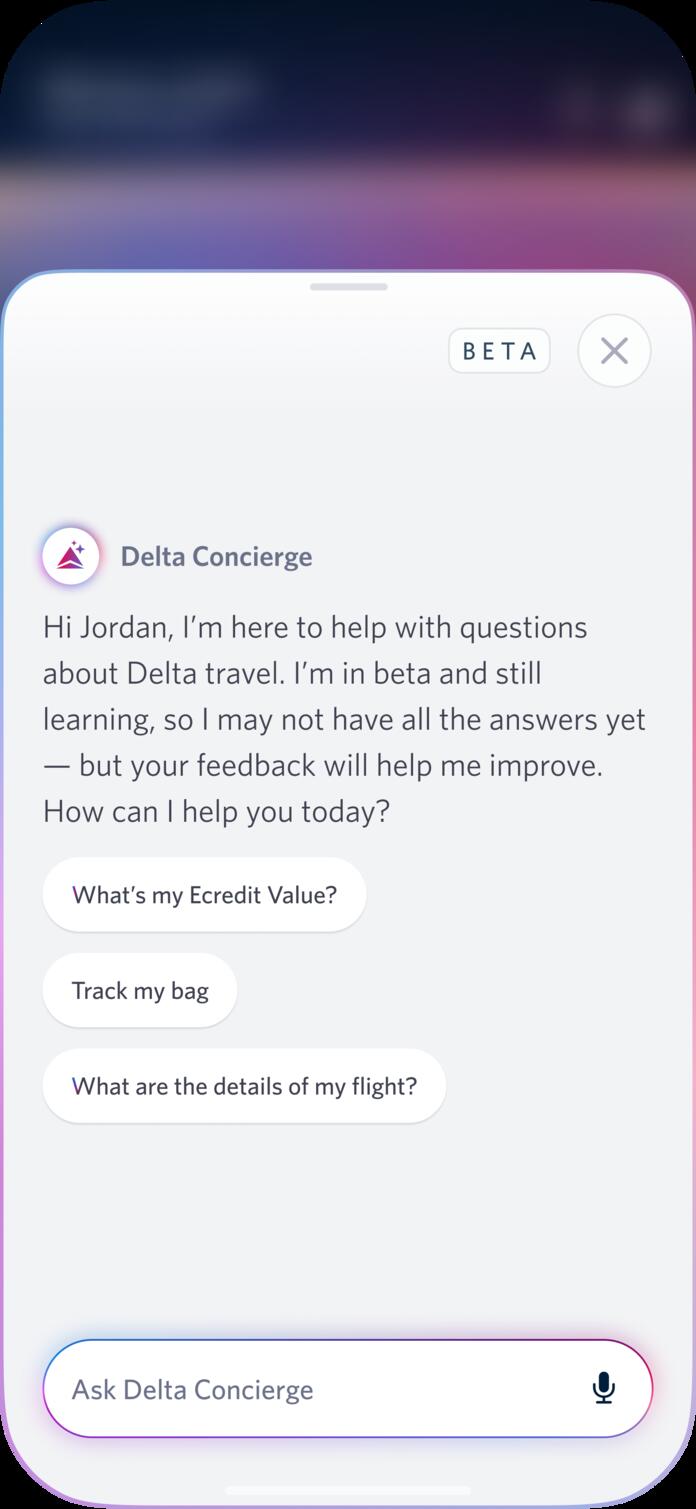
-
PayPal has partnered with OpenAI to expand shopping features in ChatGPT by 2026. The collaboration includes adopting the Agentic Commerce Protocol to facilitate seamless shopping in AI applications. Users will benefit from an instant checkout feature, allowing for secure payments and order management without leaving ChatGPT. PayPal aims to make merchants' products easily discoverable while managing routing and payments automatically.
My take: PayPal, not a leader in the payment market, seeks to establish a strong position. Direct payments in ChatGPT could significantly impact future transactions. Companies investing now will likely gain a competitive edge.
| #E-commerce #Marketing | Marketing Dive | 2025/11/01
-
Meta has launched Vibes, its AI-driven social network, in France. The app is free to use but requires users to download it and link it to their Meta account. Vibes allows video creation through prompts and music, with a drop-down menu for profile and video access. Users can also create videos from images or selfies in various styles and modify content before sharing on the Vibes feed.
My take: Vibes can help brands connect with users through fun, engaging video content. With AI-driven features, companies can create more targeted ads, boost engagement, and drive sales. This new platform opens fresh opportunities for creative marketing strategies. But once again, easy doesn't mean that flooding users with yet another AI-generated video is a good idea. There still needs to be an authentic touch behind it.
| #Marketing #Social Network #Video | Meta | 2025/11/01 -
In Sora 2, the AI video generated social network launched recently by OpenAI, users can create character cameos based not only on real people but also on imagined individuals. Sora offers customization, allowing the creation of monsters and heroes. Users can upload videos to generate these cameos, using any image or video, including pets. There is excitement around how users will engage with these new character creation features.
My take: We can imagine where it's going. Imagine a character that represents your brand and starts to produce content. Of course, keep in mind that without authenticity and a clear message, it will become just another AI spam video.
| #Leader #Marketing | OpenAI | 2025/11/01 -
Walmart is making its products available through ChatGPT for the Q4 holiday season. Amazon is likely waiting to see how well Walmart does before thinking about working with ChatGPT. Also, Salesforce has made a deal to connect its Commerce platform with ChatGPT in Slack. OpenAI is creating different AI personalities for ChatGPT 4.0 and plans to add age checks for better management of content.
My take: As a leader in e-commerce, Amazon wants to wait to connect with ChatGPT until it really has to add direct checkout in ChatGPT. The risk is losing visibility on customer traffic and becoming just a product warehouse. Walmart is the challenger and will be creative with ChatGPT.
| #E-commerce #Marketing | Walmart | 2025/11/01 -
CEO Sundar Pichai and Cloud CEO Thomas Kurian announced Gemini Enterprise at a recent Google event. This new platform is based on Google Cloud and aims to enable Google AI integration with data and tools within a secure interface. Google Cloud is a leading choice for many businesses, has surpassed a $50 billion annual revenue run rate, with 65% of customers using its AI products.
My take: Companies that rely on GCP infrastructure may find Gemini Enterprise an interesting option since AI integration is still very challenging. However, if Google limits users to only GCP tools and does not allow smooth integration with external tools, competing with ChatGPT or Claude may be difficult. AI models have different benefits, so users who want to take advantage of them could turn to general orchestrators like n8n or Make.com, which help connect to services outside Google.
| #Customer Data #Integration #Marketing | Google | 2025/11/01 -
Interesting take about how model interface might be more important than its performance. Today, despite ongoing rivalries among AI models with no distinct winner, the focus now lies on becoming the default choice that captures user attention. We will see how things evolve with new Gemini 3.
My take: Heavy users will likely stick to their preferred AI interface, highlighting a tendency in corporate environments for individuals to favor personally chosen models over generic, organization-provided options. For example, someone who's used to the mobile version of ChatGPT will naturally rely on it more at work than on the company's PC version (which, for ex., isn't available on their phone), simply because they use it more often in personal settings and are already accustomed to the mobile keyboard.
| #Integration #Leader #Workflows | Natebjones | 2025/11/18 -
OpenAI is undergoing significant changes under new CEO Fidji Simo, who is addressing the presence of many former Meta employees. About 20% of OpenAI's workforce, roughly 630 individuals, come from Meta. The organization is restructuring its growth strategies to mirror Meta's revenue tactics, causing anxiety among employees. Some fear OpenAI may lose its research lab identity and replicate the culture of larger tech firms.
An internal survey raised cultural concerns, reflecting unease about Meta's reputation on issues like content moderation and privacy. The shift towards attracting a billion weekly active users and the recent Sora app launch has led to further employee doubts regarding the organization's direction. Changing attitudes toward advertising as a revenue source compound these anxieties about user privacy.
My take: The idea of OpenAI evolving into a new social hub is tempting. It seems the organization may gradually adapt a more social dimension in its approach.
| #Leader #Social Network | The Information | 2025/11/01
-
Fivetran and dbt Labs are important companies that help businesses collect and organize data. Fivetran moves data from many sources into one place, while dbt Labs helps aggregate that data and manage different views. Now, these two companies are coming together to form a new organization. The goal of this merger is to build a stronger, more unified platform for data management.
My take: The biggest goal in data marketing is to bring different types of data together for better customer understanding. Fivetran and dbt are already essential tools for data collection and transformation. By merging, they could unlock even more value by combining their capabilities into a single, integrated tool. Definitely something worth paying attention to.
| #Analytics #Customer Data #Marketing | The Information | 2025/11/01 -
Neuralink, a brain-computer interface company founded by Elon Musk, is currently conducting clinical trials for its N1 device, attracting interest from 10k individuals. Twelve patients with limited hand use (spinal injuries or ALS) are participating, using the implant for about 7.5 hours daily. The device responds ten times faster than usual brain-to-muscle connections. One participant, Noland Arbaugh, uses the implant for daily tasks and gaming. The N1 works on Telepathy software and is implanted using a robotic arm under the supervision of a neurosurgeon. Neuralink faces challenges with scaling up and getting FDA approval for commercial use.
My take: We can also see that OpenAI has started talking about direct neural-to-machine connections. It's a little premature to imagine a Matrix-style Trinity scenario where humans can download skills directly into their brains, but with the current pace of advancement, this future could show first results sooner than we think.
| #Hard to believe | PCMag | 2025/11/01 -
AI and SaaS are technologies that support each other. Sometimes they compete because they offer similar solutions (e.g. when a CRM confirms that "agents are already integrated into their solution"). But sometimes they both have unique strengths and can work well together. For example, a SaaS CRM with LLM connected can enable non-tech users write prompts and ask question about clients in the CRM (e.g. Hubspot who enables this with ChatGPT). Companies should treat their tech tools like living things that change and grow. Future-ready technology stacks mix SaaS, AI, workflows, and human skills to create flexible systems.
My take: This trend—together with easier experimentation and "vibe coding"—is shifting marketing tech from a "we update it every few years" mindset to a model of continuous change and feature expansion. I often hear arguments like: "Our SaaS provider already added AI and agents, so we don't need anything extra." But sometimes the issue is that the SaaS vendor integrates AI poorly or blocks the use of better external AI. It's always important to test what the SaaS provider actually delivers and evaluate whether it might be better to use a leaner version of the CRM and integrate the AI separately afterward.
| #Hard to believe | MarTech | 2025/11/01 -
According to Juliette Duizabo, Head of Data in Photoroom, the job of a Data Analyst may change because AI assistant can do many analysis tasks. This change will affect how people work. Project Managers (PMs) can ask data questions directly to AI assistants and get fast answers. This new way will change how companies handle data analysis in the future.
My take: it goes with the idea that LLMs help generalists become specialists. A PM, who has a broader role, can start doing data analysis tasks. PMs often know the reason for an analysis, while technical people focus on how to do it. Now, those who understand why can quickly learn how. Personally, Data Analysts will not disappear but will merge or change names in some organizations: PMs will become PMs with Data Analyst skills, or Data Analysts will learn more technical skills and be named Analytics Engineer or have a new title like Analytical Manager. Whatever the direction, developing generalist-to-analytical skills through an AI assistant will eventually become a must-have for some organisations.
| #Analytics #Marketing #Organisation | Photoroom | 2025/11/19 -
An intriguing point about why many companies struggle with bad AI-generated writing. The author says the real problem is not the AI, but the people using it. Teams need to document what "good writing" means and stop relying on old habits. AI works best when you give it clear goals and clear instructions. If the input is vague, the output becomes confusing, and this gets even worse when big teams are involved. Instead of blaming AI, companies should improve how they write and how they guide AI, so communication becomes clearer and more effective.
| #Integration #Marketing #Organisation | Nate B Jones | 2025/11/01 -
An intriguing point on AI training: 10 people who truly understand AI can solve problems far better than 500 who have only just learned how to use it. This shows how important it is to know AI for jobs today. AI training should focus on teaching how to solve problems instead of just using tools. Since AI tools change fast, being able to adapt is very important. The key skills are breaking down tasks for AI and good communication, which can really help in jobs. Seeing AI as teamwork, not just a machine, can change how careers grow.
| #Orchestration #Training | Nate B Jones | 2025/11/01 -
Google has launched Pomelli, an AI marketing tool for small and medium businesses. It works like a social media design team that creates fun campaigns based on users' website links. Pomelli helps generate campaign ideas and creative content that fits the brand. Right now, it is part of an experimental project and has limited editing features. My take: It's a fun little project, but it shows how the future ad production workflow might work. You provide access to all the information and get instant recommendations for your social media campaigns. Try it yourself — it's free.
| #Advertising #Social Network #Workflows | Google | 2025/11/01