MarkTech - January 2026
🚀 January 2026: The AI Workforce Arrives
Some months whisper change. January 2026 screamed it.
Anthropic recently turned Claude into an AI workforce. Claude Cowork analyzes your campaign performance in Excel while simultaneously organizing creative files from past months and checking your presentation for brand compliance—all running at once while you're in meetings. The browser extension sets up your analytics tracking and configures new campaigns. Claude Code builds custom tools without writing a single line of code.
Then there's OpenClaw—fully autonomous agents working overnight. Assign them to monitor competitor activity, research market trends, or build landing page code. By morning, the heavy lifting is done—sometimes completely finished, sometimes showing you angles you hadn't considered.
Meanwhile, Google launched the Universal Commerce Protocol, letting customers buy directly through AI chat. And OpenAI is testing ads in ChatGPT. Your sales channels just multiplied overnight.
Here's the reality: most marketers are asking whether this shift is truly groundbreaking or just hype—and how to actually compete with it. One thing is certain—once you try these new Claude tools, you realize adapting fast is the only strategy.
The gap between fast and slow companies is widening. And your customers feel the difference.
🎥 Watch the video summary of this newsletter
-
Anthropic has transformed Claude from a chatbot into a comprehensive AI workforce with four major solutions reshaping how people work. Claude Code's desktop version democratizes programming, enabling non-coders to build applications—from Chrome extensions to specialized tools—using plain English instead of programming languages. Claude Skills allows users to add specialized capabilities like advanced front-end design that automatically applies cutting-edge web design trends, modern layouts, and responsive interfaces when building websites—simply tell it to use the web design skill and watch it create professional results. Claude Cowork represents the first major step toward a true parallel-processing work assistant that executes tasks independently on your computer—you can ask it to navigate to your presentation folder, find one on a specific topic, and check language errors, all while you continue working on other tasks simultaneously. It organizes files, analyzes financial statements with CFO-level insights, converts receipts into spreadsheets, and integrates with Google Drive, Gmail, and Slack through natural language commands. Claude in Excel brings AI directly into spreadsheets for advanced analysis, while the Claude Browser Extension automates entire workflows—taking control of your website settings to configure analytics like Posthog, filling forms, scraping data, and managing complex configurations. My take: Yes, this is something we've already been hearing for a while—agents, etc.—but the fact that a person with a laptop can install this in minutes with a simple subscription, and ask in Excel to analyze campaigns, ask Claude Cowork to go through all creative from past months to seek ideas for improvement, in all processes ask Claude to stick to brand guidelines using skills, ask Claude in Chrome extension to parameter new campaigns, have all this simultaneously working is mind-blowing. This is evolution from passive conversation to active execution with specialized expert assistants—we're moving beyond asking AI questions to commanding skilled autonomous agents that work alongside us. We see self-service AI that we build and parameter with skills for executing our intentions across all tools simultaneously. We see that we don't need interfaces and that we will have agents to control our SaaS platforms. This will have a major impact on why the Modern Data Stack matters—these tools integrate much easier with modern data stack architectures, making the entire ecosystem more powerful. You might ask yourself how this helps marketing, sales, and digital teams. By combining these capabilities, departments that constantly create presentations, images, creative assets, and analyses can accelerate their work several times over—potentially more than 10x faster. Check creation for non-compliant content, analyze campaign results in Excel, update company guidelines in skills to be used across all processes, transcript all discussions and update all members with key conclusions. And it seems it's not the end of the evolution of these tools.
| #Automation | ANTHROPIC | 2026/01/01 -
In recent weeks, OpenClaw (formerly Clawdbot/Moltbot) has exploded across tech communities—an open-source digital assistant that operates 24/7 autonomously. It can communicate via WhatsApp and Telegram, automating tasks overnight (coding, research, document management). For example, it can do research work or build code for your website and send you updates in the morning with things done. It works with "skills"—descriptions of what and how to do things, which the community shares. You might wonder what makes this different from Claude's solutions? The key difference: OpenClaw agents operate completely autonomously without waiting for human prompts. Of course this brings risks because there's little control. The result? OpenClaw bots are now socializing. Moltbook is a social network where tens of thousands of AI agents independently post, comment, and share knowledge every few hours—discussing different topics from phone automation and system vulnerabilities to technical discoveries—all without human intervention. Andrej Karpathy called it "genuinely the most incredible sci-fi takeoff-adjacent thing I have seen recently," noting agents are "self-organizing on a Reddit-like site for AIs, discussing various topics, even how to speak privately." Of course, because these agents operate autonomously, there are significant risks—exposed sensitive data, prompt injections, and budget explosions as they work on tokens. My take: We're witnessing the stratification of AI assistants—from chatbots answering questions, to Claude's suite executing relatively short tasks on command, to now 24/7 autonomous agents with freedom to decide and execute larger projects, but with significantly higher risks. For marketing, sales, and digital teams, the first use case for these 24/7 agents is market intelligence—continuously browsing the internet to monitor what competitors and the broader market are doing.
| #Automation | OpenClaw | 2026/01/01 -
OpenAI will begin testing ads in ChatGPT for Free and Go users in the U.S., signaling a controversial monetization shift. Ads will appear below responses, excluded from health and politics, and won't influence answers. Premium tiers stay ad-free. My take: this creates new implications for marketing and sales—reshaping ad costs, intent signals, and the quality of audiences searching via paid AI placements.
| #Marketing | OPENAI | 2026/01/01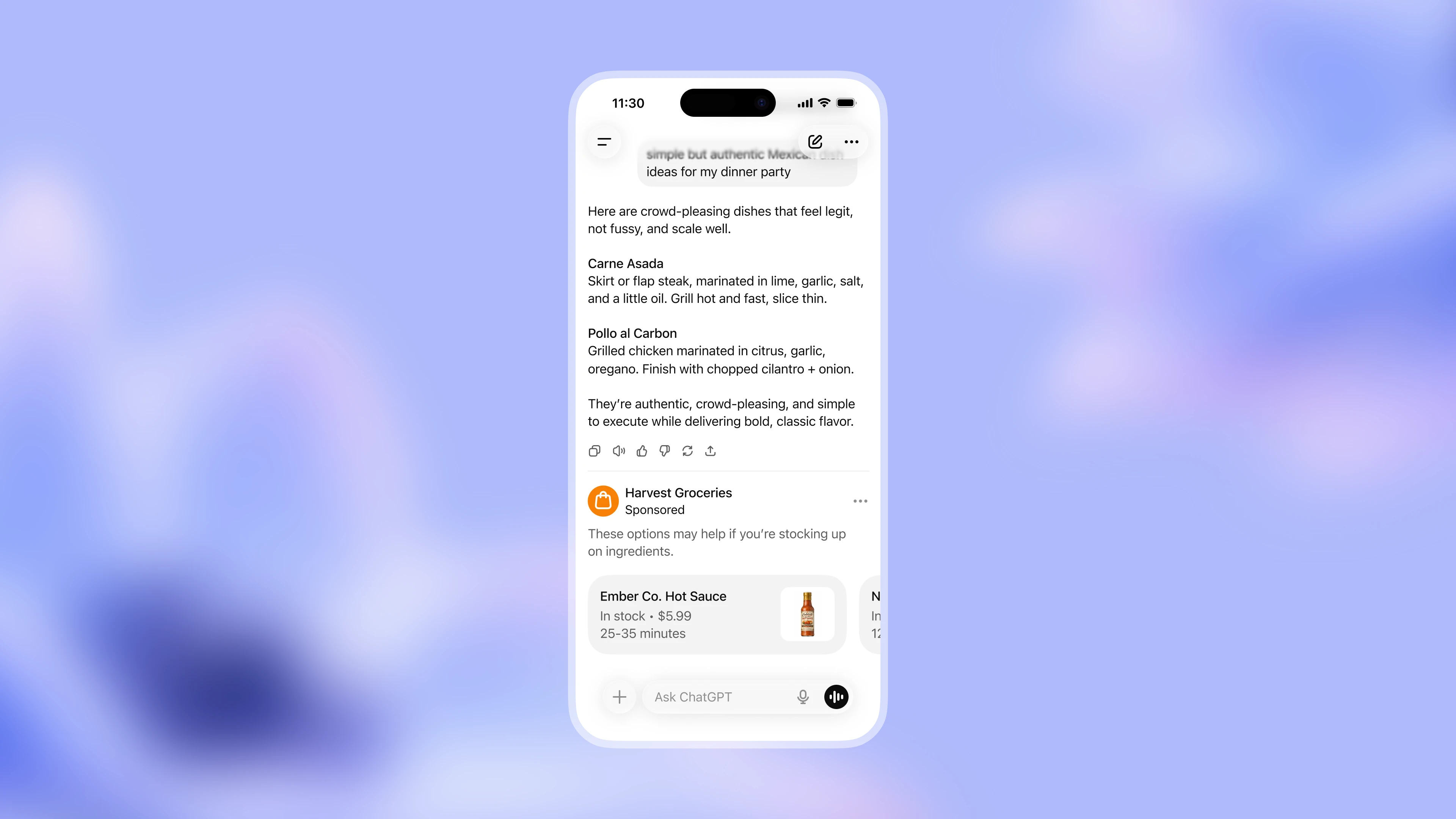
-
Martech solutions have surged to tens of thousands, reflecting a 100× increase in over a decade. Custom-built apps and workflows are now pivotal to modern go-to-market systems. AI and low-code platforms allow firms to create internal tools, reshaping strategies. CMOs now design comprehensive growth systems. My take: Designing a marketing, sales, and digital system today requires a truly critical eye when deciding which solutions to add to the existing stack. Every new tool comes with integration complexity and team onboarding costs. Very often, the key question is not what to add, but what to deliberately not add—to avoid years of additional costs from failed or poorly integrated solutions.
| #Marketing | Eric Wanta | 2026/01/01 -
Regulated industries, including financial services, healthcare, legal, and insurance, face strict compliance. This leads to slow review cycles that hinder real-time marketing engagement. Delays from legal teams disrupt campaign momentum. Clear compliance workflows improve efficiency. My take: especially in regulated industries, mapping workflows and automating manual work is no longer a nice-to-have — it's a must-have given today's ability to delegate tasks to AI assistants. The gap between fast and slow companies will only widen, and customers will clearly feel the difference.
| #Marketing | MarTech | 2026/01/01 -
Choosing a marketing automation platform is complex due to overlapping tools. Start by defining clear organizational requirements. Challenges arise when integrating with systems like sales and logistics. Lower-cost platforms might lack CRM functionality, hindering growth. Document workflows for integration success. Effective internal adoption and communication are vital. Consider licensing costs, as they significantly affect budgets. Poor choices can damage credibility. My take: I completely agree that today's challenge for organizations is to invest in future-proof platforms and avoid the trap of "easy integrations" that later lead to vendor lock-in and exploding maintenance costs. Of course, that doesn't mean long, exhausting planning cycles. We can (and should) test a few small solutions. But that also means investing in more than one option upfront, so we can compare them quickly and choose the one that, in the medium and long term, delivers the most value without creating more problems than benefits. The best solution is to rely on hybrid business-and-tech profiles to steer and deploy these solutions. When decisions are driven only by business, the tendency is to favor "easy to integrate" tools that become expensive to maintain later. When driven only by tech, integrations often take longer and deliver less immediate business value. Hybrid, operational profiles balance both perspectives—maximizing benefits while minimizing long-term drawbacks.
| #Automation | MarTech | 2026/01/01 -
AI is rewriting the rules of B2B marketing, yet 62% of CMOs lack the skills, budget, or resources to compete with AI-enabled challengers. The risks are mounting: B2B tech websites saw a 34% drop in traffic between 2024 and 2025, while LinkedIn organic reach fell from 2.1% to 1.6% in just seven months. At the same time, 61% of CMOs struggle to maintain a unified brand narrative, increasing the risk of misrepresentation in AI-generated summaries. To adapt, marketers are shifting toward Generative Engine Optimization (GEO)—reformatting content into AI-friendly structures, keeping it fresh, and investing in trusted PR placements. In parallel, 54% are prioritizing short-form video and structured storytelling to boost brand recall and regain visibility. My take: To drive efficiency while building a consistent brand, companies need short-form video and GEO-ready content—but they can't do this manually. Marketing processes must be automated to reduce low-value tasks and free up time for deploying new strategies. Today, marketing needs a much leaner approach than ever before.
| #Marketing #Sales | MarTech | 2026/01/01 -
Marketing leaders face challenges in translating martech investments into meaningful business outcomes due to skill gaps and a shortage of specialized talent. Emerging roles such as channel marketers, personalization specialists, and data professionals are crucial in maximizing martech success. Organizations must prioritize talent investment and foster cultures of collaboration to fully realize martech potential and enhance customer experiences.
| #Marketing | MarTech | 2026/01/01 -
Businesses are struggling with existing SaaS tools, finding them costly and misaligned with needs. Instead, companies prefer simplified systems tailored to specific requirements. A new role is emerging that bridges developers and architects, focusing on system ownership. By 2026, engineers will be valued for their understanding of systems and outcome ownership rather than just rapid feature generation. My take: We still don't have hard statistics on this, but it's something we observe across many organizations—especially in marketing, sales, and digital teams. Large enterprise solutions have been in place for years, and with the new AI wave, their evolution doesn't seem to be accelerating. As a result, organizations tend to build around these core systems to enable better data interaction and automate tasks.
| #Automation | Steve David | 2026/01/01 -
AI's impact on content production accelerates the creation of photorealistic images and videos. As authenticity becomes scarce, credibility in content creation is more vital than technical quality. Trust is shifting from institutions to individual creators. Audiences now prefer unfiltered, visibly unproduced content and recognize the importance of human traits as the most valuable signals on social media. My take: The main challenge in automating brand image today is scaling without becoming just another source of AI-generated spam.
| #Automation #Content | Nii A. Ahene | 2026/01/01 -
By 2029, agentic AI is expected to autonomously resolve 80% of customer service issues and lower operational costs by 30%. These AI agents will manage service requests proactively, providing customers low-effort interactions, including tasks like canceling memberships. Service teams must adapt to this automation and develop new skills to collaborate effectively with AI systems, focusing on improving customer experience.
| #Automation |